
When purchasing a Rolex watch, understanding the age of the timepiece can be just as important as knowing its condition, model, or service history. One of the most useful tools for determining the approximate production year of a Rolex is its serial number. For collectors and first-time buyers alike, knowing how to interpret a Rolex serial number can provide valuable insight into the watch’s history and help support a more informed purchasing decision.
Every Rolex is assigned a unique serial number during production. Historically, these serial numbers followed a sequential pattern, allowing experts to estimate the year in which a watch case was manufactured. Rolex no longer publishes official serial number records, but decades of collector research have produced reliable reference charts that can help to identify the approximate production period of many older models so you can be more informed when buying a Rolex that suits you.
If a Rolex watch was manufactured before 2008, the serial number is generally engraved deeply between the lugs at the 6 o’clock position beneath the bracelet so that it’s hidden when the watch is worn. Between around 2005 and 2008, Rolex started to transition serial numbers to the inner ring located between the dial and crystal (called the ‘rehaut’). For Rolexes manufactured from 2008 onwards, serial numbers tend to be found exclusively on the rehaut, with modern Rolexes produced from around 2011 featuring randomised alphanumeric serial numbers, essentially making it impossible to determine the production year from the serial number alone. In cases such as these, documentation like warranty cards and service records become increasingly important, and it’s something a Portsmouth luxury watch shop like Solent Timepieces looks out for when buying and selling Rolexes, because knowing the year of a Rolex can significantly increase its value, with certain production years being particularly desirable due to historical significance and limited production runs or design changes. Take a Rolex Submariner, for example: these were produced during a transitional period and may be more sought after than an otherwise identical model manufactured a few years later. Vintage Rolexes from the 60s, 70s, and 80s often attract strong collector interest (and especially when their components remain original to the period!).
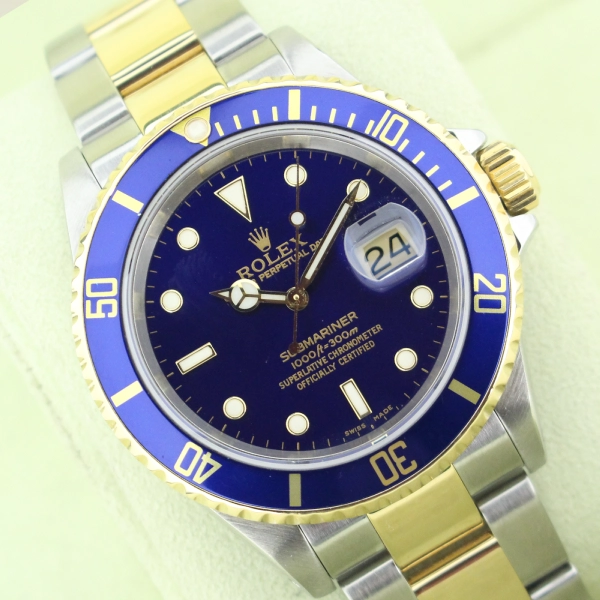
The production year can also assist buyers in verifying authenticity – although a serial number alone cannot confirm that a watch is genuine, it should correspond logically with the watch’s model, dial configuration, bezel style, bracelet type, and movement. These are good things to check, as if a seller claims a Rolex was produced in a certain year but the serial number indicates otherwise, this could be a red flag regarding the seller’s knowledge or their validity. When looking for the best place to buy a Rolex, it’s a good idea to go with an experienced dealer who uses serial numbers as one part of a much broader authentication process.
Serial numbers indicate when the watch case was produced but not necessarily when the watch was sold. Some Rolexes may have remained with authorised dealers for months or even years before reaching their first owner. Service parts may also have been replaced during the watch’s lifetime so not every component will necessarily date to the same year as the case.
When you purchase a Rolex, understanding the watch’s production year can help you assess value and verify authenticity. Solent Timepieces ensures every watch is carefully inspected and authenticated, with thousands of watches having been sold to happy clients over the last few years. In this way, buyers can purchase with confidence and gain a clear understanding of the timepiece’s background and provenance.